
Introduction to Technical SEO
Hey there, curious web wanderer! So, you’ve heard about SEO, the magical art of helping websites rank higher on search engines. But have you met its tech-savvy sibling, Technical SEO? Think of Technical SEO as the behind-the-scenes superhero that ensures your site is as search-engine-friendly as possible. It’s like tuning up a race car for peak performance, making sure everything from the engine to the little nuts and bolts is in tip-top shape.
Technical SEO involves:
– Website Speed: Ensuring your site loads faster than a blink of an eye.
– Mobile-Friendliness: Making sure your website looks awesome on phones and tablets.
– Crawlability: Helping search engines explore your site efficiently.
Understanding these aspects can transform your site’s interaction with search engines, boosting its performance and visibility. Ready to dive into this tech adventure? Let’s go!

The Importance of Technical SEO
Alright, folks! Let’s dive into why technical SEO is like the secret sauce that can do wonders for your website. This aspect of SEO goes beyond the keywords and content to get the technical bases right. Think of it as the engine under the hood of your website that powers better visibility and performance. Let’s explore the key reasons why technical SEO is essential.
Impact on Search Engine Rankings
When it comes to topping the charts on Google or any search engine, technical SEO plays a major role. This is because search engines use bots to crawl and index websites. They love it when your site is easy to crawl and its structure is organized. With effective technical SEO, you’re essentially giving these bots a VIP pass to easily navigate your site.
– URL Structure: Clean, logical URLs are a part of technical SEO that make it easier for search engines to read and index your pages.
– HTTPS Encryption: Using HTTPS rather than HTTP ensures data security and can also impact your ranking positively since Google considers it a ranking signal.
– Structured Data: By using structured data and schema markup, you help search engines understand your site’s content better, potentially boosting your rankings with rich snippets.
Enhancing User Experience
Let’s be real: in today’s fast-paced world, nobody has time to wait around for a site to load. Technical SEO heroes the user experience! A technically sound site is not only search-engine-friendly but also user-friendly, which Google loves. Here’s how:
– Page Speed: A fast-loading site is crucial. Slow pages frustrate users and often lead them to bounce over to a competitor’s site.
– Intuitive Navigation: A well-structured site ensures users (and search engines) easily find what they need. Plus, a seamless journey through a website keeps visitors engaged longer.
– Safe Browsing: Ensuring your site is free from malware and harmful redirects creates trust, indirectly enhancing user experience.
Improving Site Performance

Your website should be running like a well-oiled machine 24/7. Technical SEO steps in to fine-tune the small but crucial details that boost overall performance.
– Server Optimization: Ensuring that your server is capable of handling high traffic and that your hosting is reliable prevents downtime and slow performance.
– Minimizing HTML/CSS Errors: Fewer site errors mean smoother user experience, and it also ensures your content is delivered as intended without any hiccups.
With technical SEO, you’re not just looking to please the search engines but also to offer every visitor a stellar user experience that keeps them coming back.
Key Components of Technical SEO
Now that we know why technical SEO is crucial, let’s get acquainted with its key components. These are the building blocks that shape how technical SEO works its magic for your site.
Website Crawling and Indexing
Crawling and indexing is essentially how search engines understand what your website is about. Picture it like search engines coming to your site with giant flashlights, ready to map every twist and turn.
– Crawlability: The first step in ensuring your site can be crawled easily is to have a logical site structure. Think of a flat hierarchy where every page is easily accessible from the homepage.
– Canonical Tags: These help prevent issues with duplicate content by specifying the “primary” version of your webpage. It’s like telling search engines, “Hey, this is the one you should pay attention to!”
XML Sitemaps and Robots.txt
Let’s talk about making friends with the search engine bots. XML sitemaps and Robots.txt files are like the treasure maps for search engines.
– XML Sitemaps: This straightforward file acts as a road map to help search engines figure out the important pages on your site and how often they change. It’s a straightforward yet effective tool to improve your site’s indexation.
– Robots.txt File: This file guides search engine bots on which parts of your site to ignore. Imagine it saying, “No entry beyond this point!” It’s perfect for sections you want private or irrelevant for search engines.
Mobile-Friendliness and Responsive Design
In the age of smartphones, making sure your site is mobile-friendly is no longer a nice-to-have; it’s a must-have. Technical SEO emphasizes optimizing for mobile to ensure your site is smooth sailing across all devices.
– Responsive Design: This refers to a design that automatically adjusts to fit all screen sizes. Whether users are on a desktop, tablet, or smartphone, your site remains user-friendly.
– Mobile Usability: It’s about ensuring that buttons are easily tappable and navigation is straightforward. Google uses a mobile-first indexing approach, meaning it looks at the mobile version of the site first, making mobile-readiness crucial.
In conclusion, technical SEO is like your website’s fitness coach, ensuring it performs at its absolute best. By focusing on these components, you’re setting up your site to thrive in search results and deliver a fantastic experience to visitors. So, dive into the technical world and give your website the love it deserves! 🌟
Technical SEO Best Practices
Improving your website’s technical SEO is a massive step toward mastering the art of ranking high on search engines. Think of it as the foundation of a house—a sturdy foundation ensures everything else functions smoothly. Let’s dive into a few best practices that will make your website a search engine’s best friend.
Site Speed Optimization
Imagine walking into a store and finding super slow service. Frustrating, right? The same frustration occurs when users visit a slow website. In the tech world, every second counts—a page that takes too long to load can drive visitors away. That’s why site speed optimization is crucial for technical SEO.
You can boost site speed by:
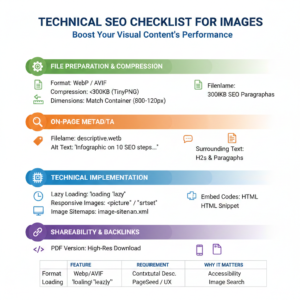
– Compressing Images: Use tools like TinyPNG to reduce image sizes without losing quality.
– Browser Caching: Enable caching to store resources locally on a user’s browser, reducing load times on repeat visits.
– Minifying CSS, JavaScript, and HTML: Cutting unnecessary code can significantly speed up your site.
– Using a Content Delivery Network (CDN): Distribute your content efficiently worldwide, making it load faster regardless of where your users are.
Your goal should be to create a seamless and fast experience for users. Remember, a happy user is more likely to stick around, and Google loves satisfied users!
Structured Data and Schema Markup
Structured data and schema markup might sound a bit technical, but trust us, they’re your allies in making your website more readable for search engines. Think of them as signposts that help Google’s crawlers understand your website content better.
With schema markup, you can:
– Highlight reviews, making your product pages shine.
– Show event details in search results, boosting visibility.
– Display rich snippets, enhancing how your content appears in search results.
Implementing structured data involves adding a specific code to your webpage that helps search engines better understand the context of the content. You can use tools like Google’s Structured Data Markup Helper to make this task less daunting.
Secure Sockets Layer (SSL) Implementation
Ever noticed that little padlock icon next to a website’s URL? That’s courtesy of SSL (Secure Sockets Layer), a critical component in safeguarding your website’s data. Beyond security, an SSL certificate is also a trust signal to your visitors, indicating that their data is secure and encrypted.
Not only does SSL:
– Protect sensitive data transferred between your visitors and your site,
– Increase your credibility, making users feel safe,
– But it’s also a direct ranking factor in Google’s algorithm—meaning having SSL can enhance your SEO performance.
Switching your website to HTTPS (if it’s not already) is a relatively straightforward process but an essential one. Once implemented, make sure all internal links direct to the HTTPS pages to ensure a smooth user experience.
Mastering these technical SEO best practices will significantly enhance your website’s performance on search engines and in the eyes of your visitors. So roll up those sleeves and polish that technical foundation! Your search engine ranking can only go up from here.
Conclusion
In wrapping up, technical SEO is like giving your website a backstage pass to search engine success. It lays the foundation that supports all your other SEO efforts. By focusing on important aspects like site speed, mobile-friendliness, and secure connections, you ensure your site is ready to shine. Remember, a well-optimized website not only helps search engines but also creates a better experience for your visitors. So, keep refining your technical SEO skills to stay ahead of the game!